

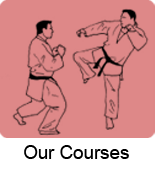

Against terrorists, against robbers, against murder, against rapists.
Karate - according to Faiga, longevity.
"When Shlomo Faiga came to Moshav Moledet in ISRAEL 30 years ago at the age of 25, nobody thought about - knife in the back,attacking Israeli soldiers or innocent civilians. Karate considered at the time for another sport. No more. Interest-only competitions.
Today the situation is different, mothers sending their children to learn karate and flag of the day read: stay alive - survival. "
Shlomo Faiga, 6th dan black belt karate & Judo. learned thie profession in South Africa. As a Jew, a white minority, the goal was to stay alive. Faiga couldn't think of, that also in Israel it would be the same.
Faiga arrived to Moledet with his family, to engage in agriculture. At the same time he began teaching karate small circle, the first students arrived from the Jordan Valley, then - it began national competitions, Faiga & his karate on the map!
Shlomo Faiga appeared for the first time Maccabiah of 1961. We did not know this profession back than. Faiga and another friend, also born in South Africa, represented Israel. "After the contest short story appeared in Ha'aretz." Writen, that " Two Jews from South Africa performed stunts on the mattress,havent seen even in cowboy movies."
Karate enterd Maccabiah as a competitive profession. Meanwhile, Shlomo Faiga and his disciples arrived also to Hapoel convention.
800 students, several state champions, Mark Debremeker, Roy Faiga, Maccabiah Champion & Oren Faiga, the last Maccabiah Games champion, both sons of Shlomo. Shlomo Faiga 30 years educating new generations of karate - all volunteer, free, and gives his heart, one of the few places in the country, which also teach karate, Judo, and survival.
"What people call sport or show is a very small part of what we do," he explains, there are those who teach the technique - beautiful movements, but it's not what I want to impart to my students. What matters is not how a person behaves on the mat, but how it implements it in every day life. How he got into a pay phone and how he was waiting at the bus stop."
(Part of a report with Onshi Sydny Shlomo Faiga. published on Friday Jan-1st 1988)